

A Museum That Breathes With Its Surroundings
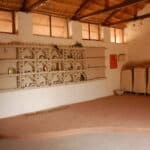
Arna-Jharna was not built to separate people from culture, but to connect them more deeply with it. Once an abandoned sandstone mine, the site has been transformed into a living ecosystem — where water bodies, flora, and fauna coexist with music, craft, and memory. Every tree, tool, and trail tells a story of adaptation and balance — the same values that shape desert life.
Knowledge Rooted in the Ordinary
At its heart, Arna-Jharna believes that the “ordinary” is extraordinary. Everyday objects — from a broom to a pot — become pathways to understand how people think, make, and sustain. These are not artifacts frozen in time; they are living connections between ecology, labour, and creativity.
People as Keepers of Culture
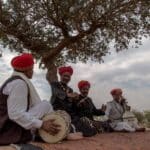
Here, knowledge does not belong to archives alone. It lives in the voices of artisans, musicians, herders, and storytellers who continue to shape Rajasthan’s cultural landscape. Their wisdom, passed down through generations, reminds us that tradition is not static — it evolves, responds, and renews itself with each telling.
Learning in the Open
Visitors don’t just observe; they participate. Through guided walks, workshops, and performances, Arna-Jharna invites students, travelers, and researchers to engage directly with the museum’s ecosystem — to learn not only about the desert but from it.
A Philosophy in Practice
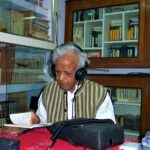
The museum’s founder, Komal Kothari, envisioned it as a “laboratory of the ordinary.” His idea was simple yet profound: the folk is contemporary. The museum continues this legacy by creating a space where cultural knowledge, ecological awareness, and community participation come together — not as separate disciplines, but as one living dialogue.
Beyond Walls, Beyond Time
To visit Arna-Jharna is to experience continuity — between past and present, nature and culture, people and place. It is a reminder that museums, like deserts, are never still. They shift, adapt, and endure.