

From Everyday Tools to Living Heritage: The Story of Rajasthan’s Brooms
Revisiting the humble broom as a symbol of ecology, craft, and cultural continuity
At first glance, a broom may seem like an ordinary household object — something found in every home, used daily, and easily replaced. Yet in Rajasthan, this simple tool carries generations of craft knowledge, ecological understanding, and social meaning.
At Arna-Jharna: The Desert Museum of Rajasthan, the broom is not merely an exhibit. It is a storyteller — connecting people, plants, and practices across time.
The Ecology of the Broom
Every broom begins with the desert’s vegetation. Local communities gather specific grasses, shrubs, and stalks after the monsoon season, when the plants are dry and strong. Species such as sewan, bajra, and phog are commonly used — each selected for its texture, flexibility, and availability.
These plants thrive in arid soil, requiring little water, making them a perfect example of sustainable use of native resources. The broom thus embodies a circular relationship with the desert — one that relies on knowledge of timing, weather, and ecology.
The Craft and the Maker
Broom-making is an inherited skill, often passed down through women’s work in rural households. Stripped stalks are sun-dried, tied carefully with fiber or cloth, and adjusted for balance and grip.
Each maker brings her own method — some prefer shorter handles for indoor sweeping, others craft longer brooms for courtyards or temples. In every variation, the broom reflects both practical innovation and aesthetic care.
“When you make something every day, you learn to make it better — even if the world doesn’t call it art.”
— A broom maker from Osian, Rajasthan
Symbol of Labour and Dignity
In many traditional communities, broom-making and sweeping were seen as lowly tasks. But when seen through the lens of craft and ecology, they represent resilience and creativity.
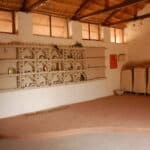
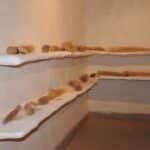
By displaying over 150 kinds of brooms, Arna-Jharna challenges this hierarchy — placing the broom not below art, but within it. It becomes a symbol of respect for manual work and the invisible efforts that keep our spaces and systems clean.
Lessons from the Broom
The broom teaches us:
- Sustainability: It uses local, renewable materials and produces no waste.
- Adaptation: Its design changes with region, surface, and weather.
- Continuity: It connects past knowledge with present needs.
In a world searching for sustainable practices, this humble tool offers a grounded philosophy — use what grows around you, and respect the hands that shape it.
Visit and Experience the Broom Collection
Visitors to Arna-Jharna can explore India’s only Broom Collection, interact with traditional makers, and understand the materials through tactile and visual displays. For students, it opens conversations about craft, caste, ecology, and value — all through an everyday object.
Plan Your Visit →