

The Sound of Ecology
Acoustic ecology — the study of how sounds emerge from landscapes — shows that soundscapes reflect the health and character of an ecosystem. As one research overview remarks, “soundscape ecology shares many parallels with landscape ecology”
In dry lands, the sounds change with season, moisture, material, and movement. The texture of clay, the creak of a tree in the wind, the rustle of grass — each tells a story. At Arna-Jharna, our collection isn’t restricted to visible objects. It invites visitors to listen: the lake’s surface, the stone bund, the wind passing through desert shrubs.
What the Desert Sounds Tell Us
- Material presence: Hard rock, cracked clay, and gravel crunch differently underfoot. The sound of walking on sand or stone tells us about terrain, load-bearing, and movement.
- Temporal rhythm: The shifting volume of bird calls or insect buzz connects us to the cycle of night and day, wet and dry seasons. A quiet spring evening means different things than a cold dawn or a hot midday lull.
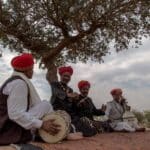
- Community and craft: Traditional practices — potters turning wheels, musicians tuning sarangis, broom-makers gathering grass — each produce their own sonic signature. These sounds remind us that culture is embedded in material action.
Listening as Learning
For students and visitors, we invite a “sound-walk” across museum grounds:
“Close your eyes. What changes do you hear when you move from the lake toward the bund? Between open sand and shrub clusters?”
Such activity turns the museum into a classroom of listening — not just looking. It aligns with our philosophy that objects and landscapes are living teachers.
Why It Matters Now
Today, many voices are lost: soundscapes are masked by machines, traffic, and global habits of noise. Research shows that increased background noise can reduce the “listening area” for animals — with cascading ecological effects.
By restoring quiet places, inviting listening, and documenting sounds, we reconnect with how desert people have lived for centuries.
How You Can Experience It
If you’re planning a visit:
- Attend our “Listening the Land” session during morning or early evening when acoustics are at their richest.
- Join the guided walk where we provide simple ear-training questions and invite reflections.
Consider integrating this into a school visit or workshop: we can tailor sessions for different age groups and learning objectives.
Plan Your Visit →