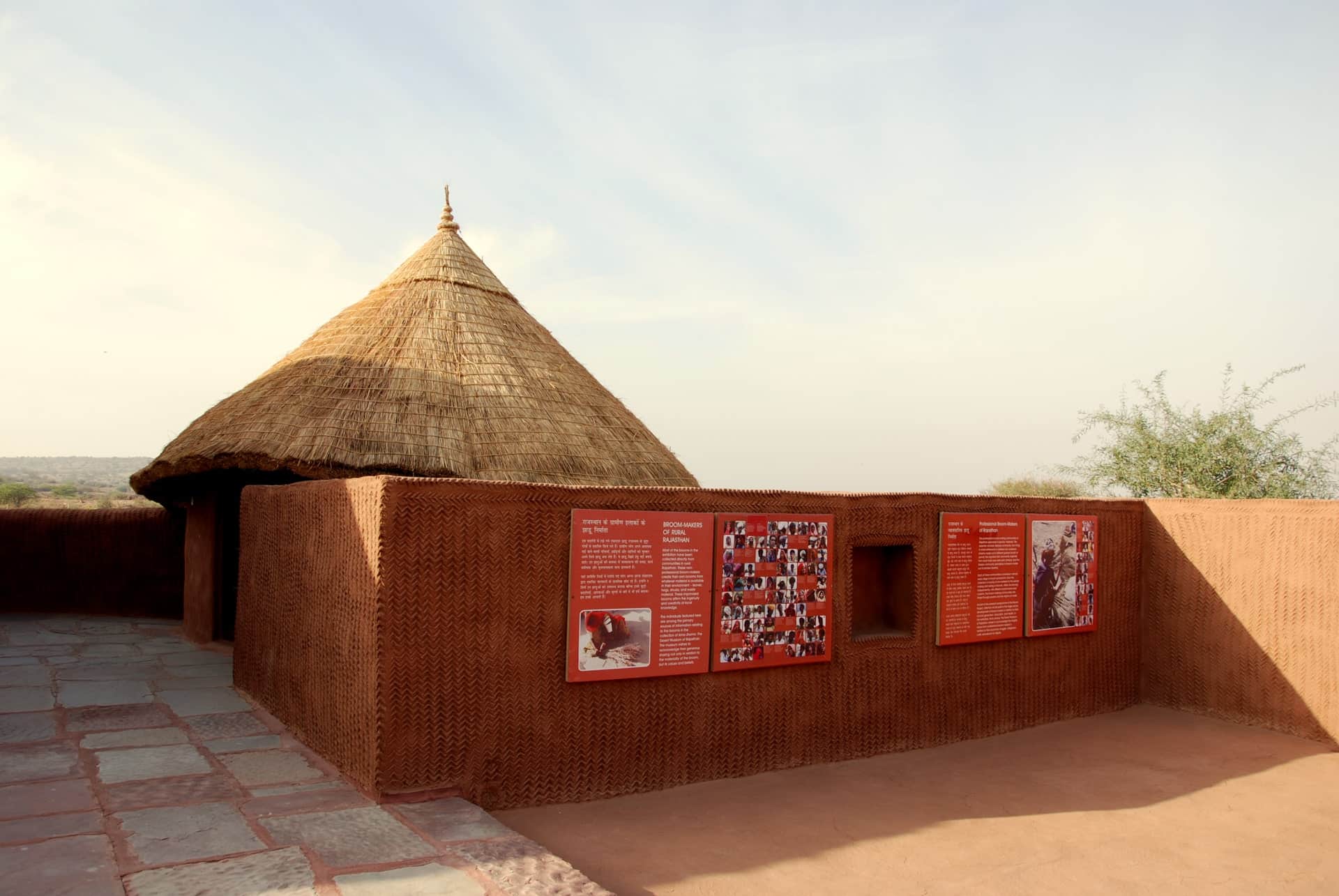
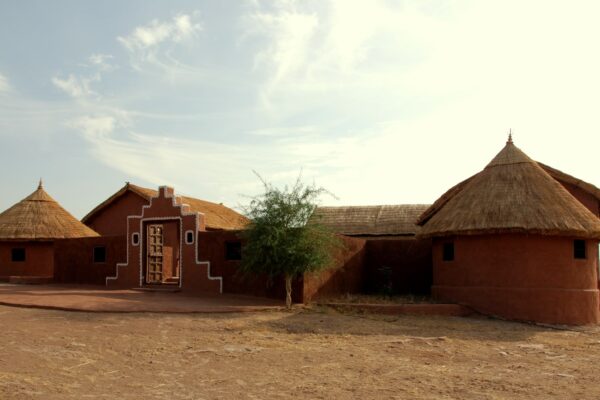
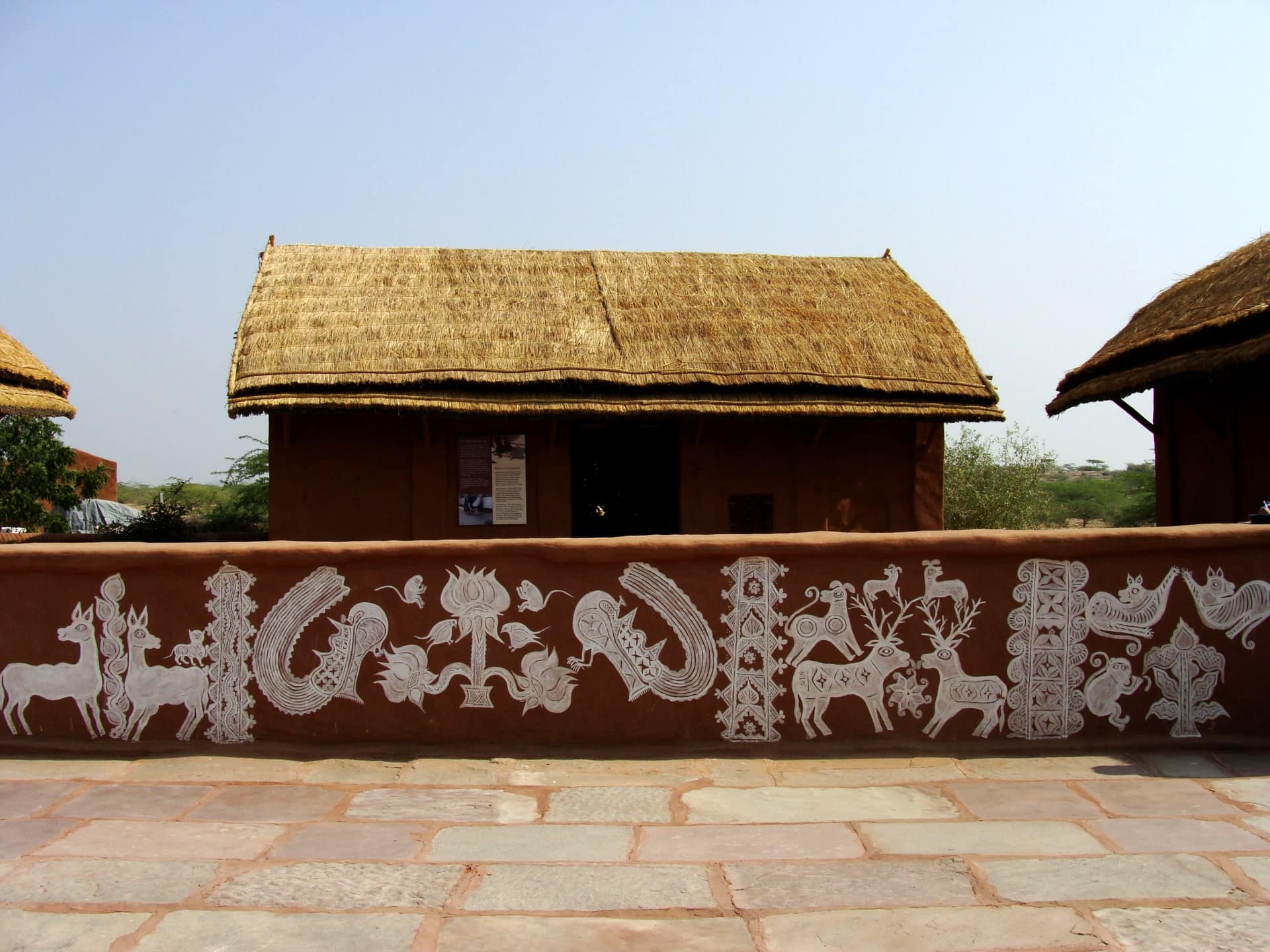
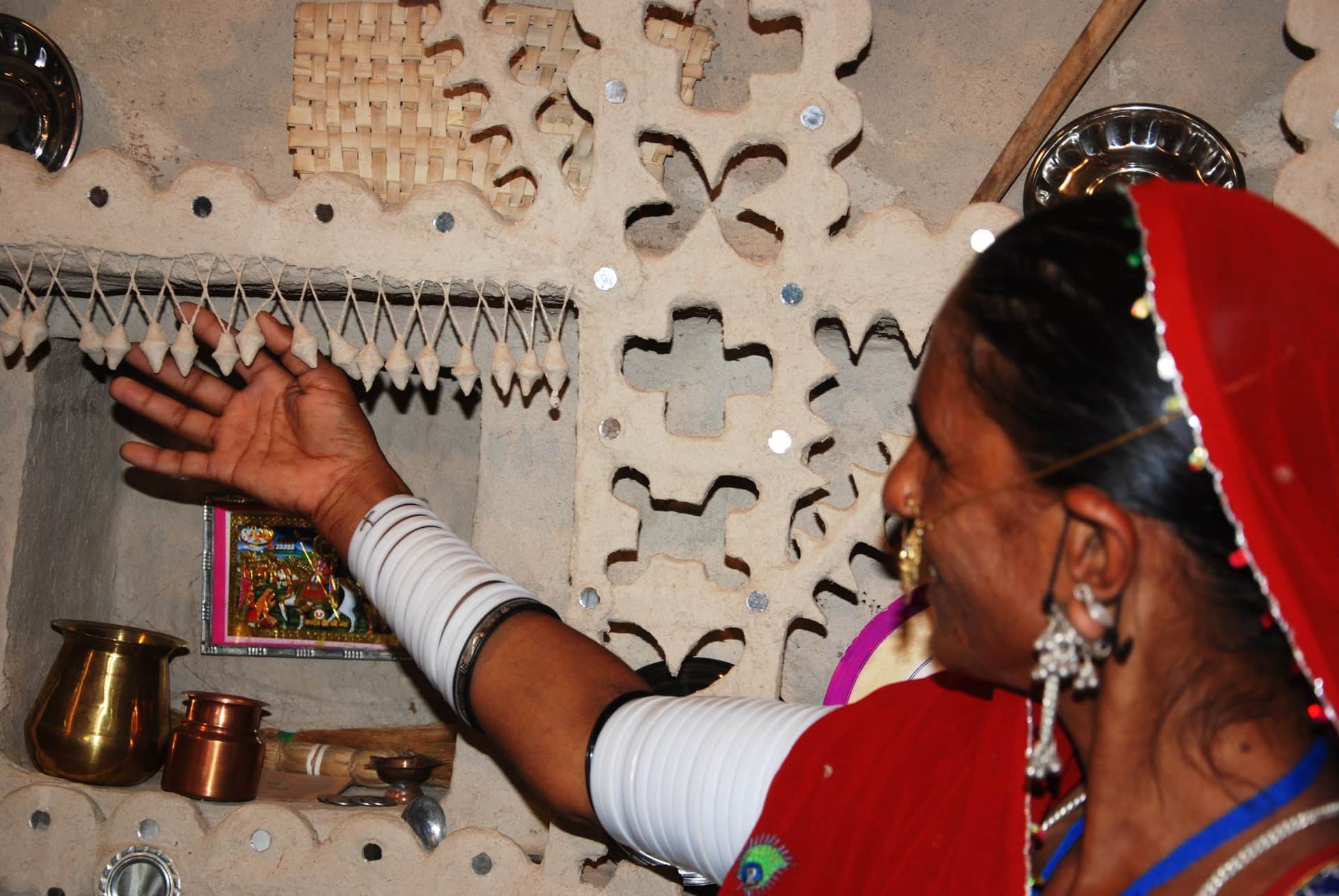
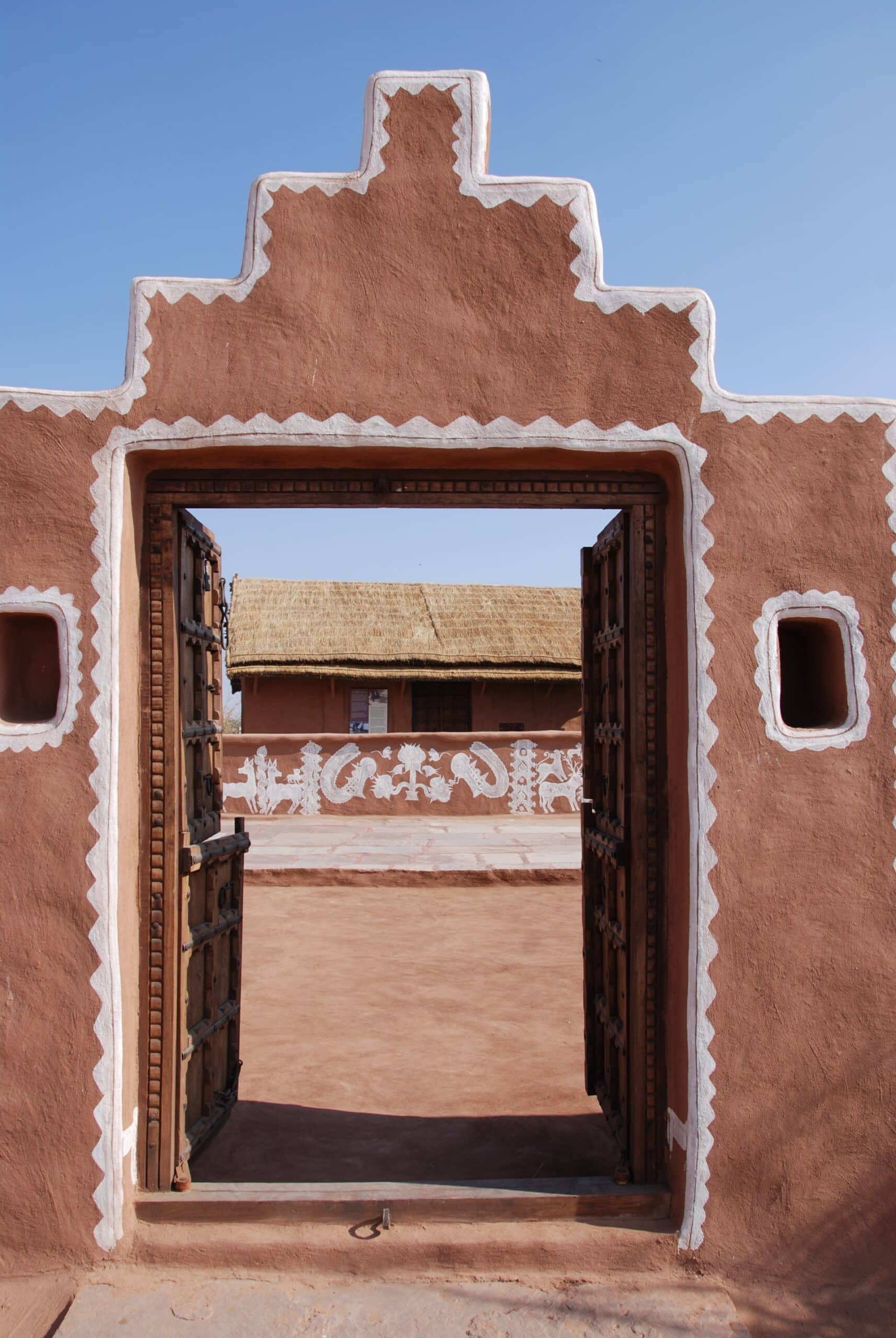
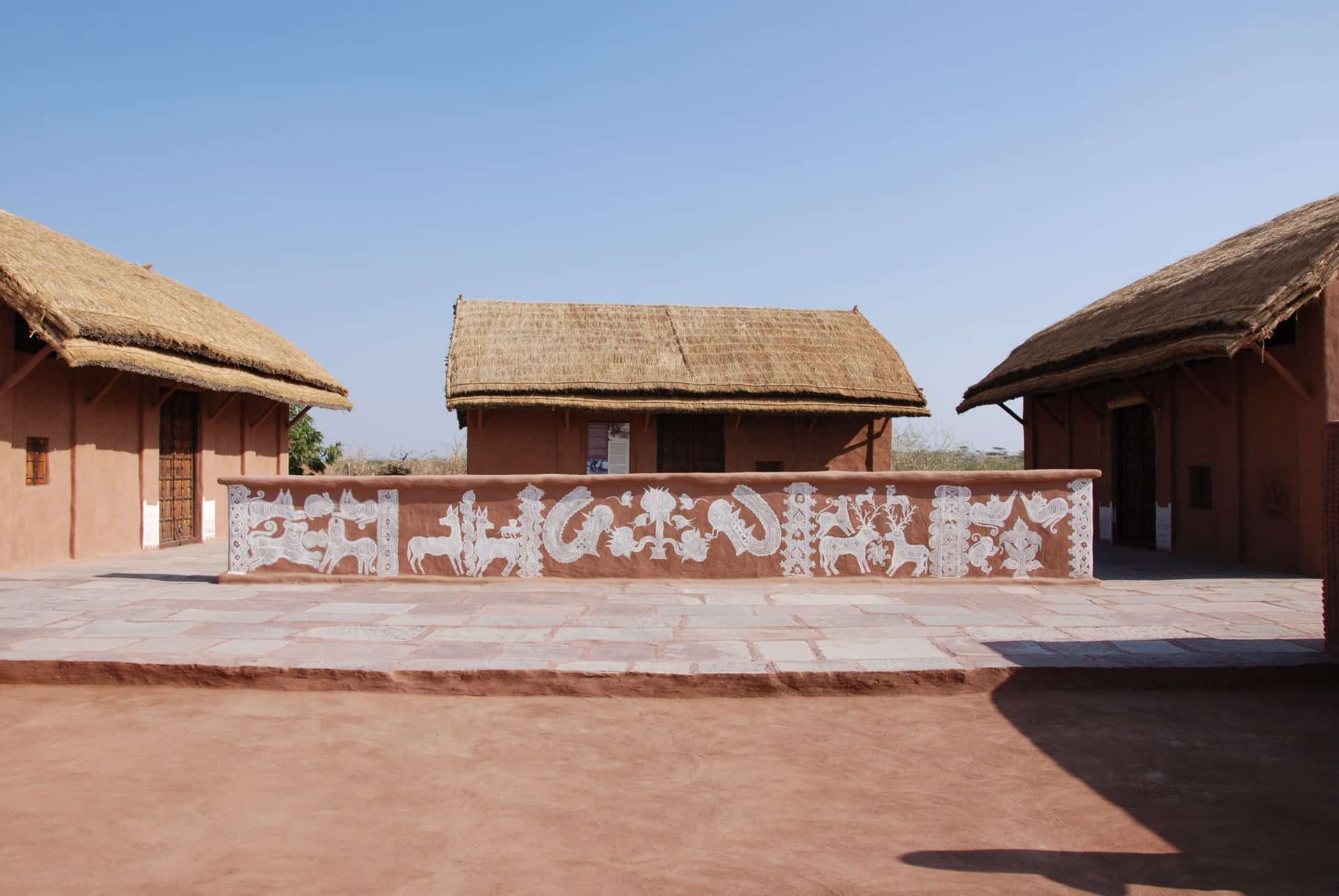
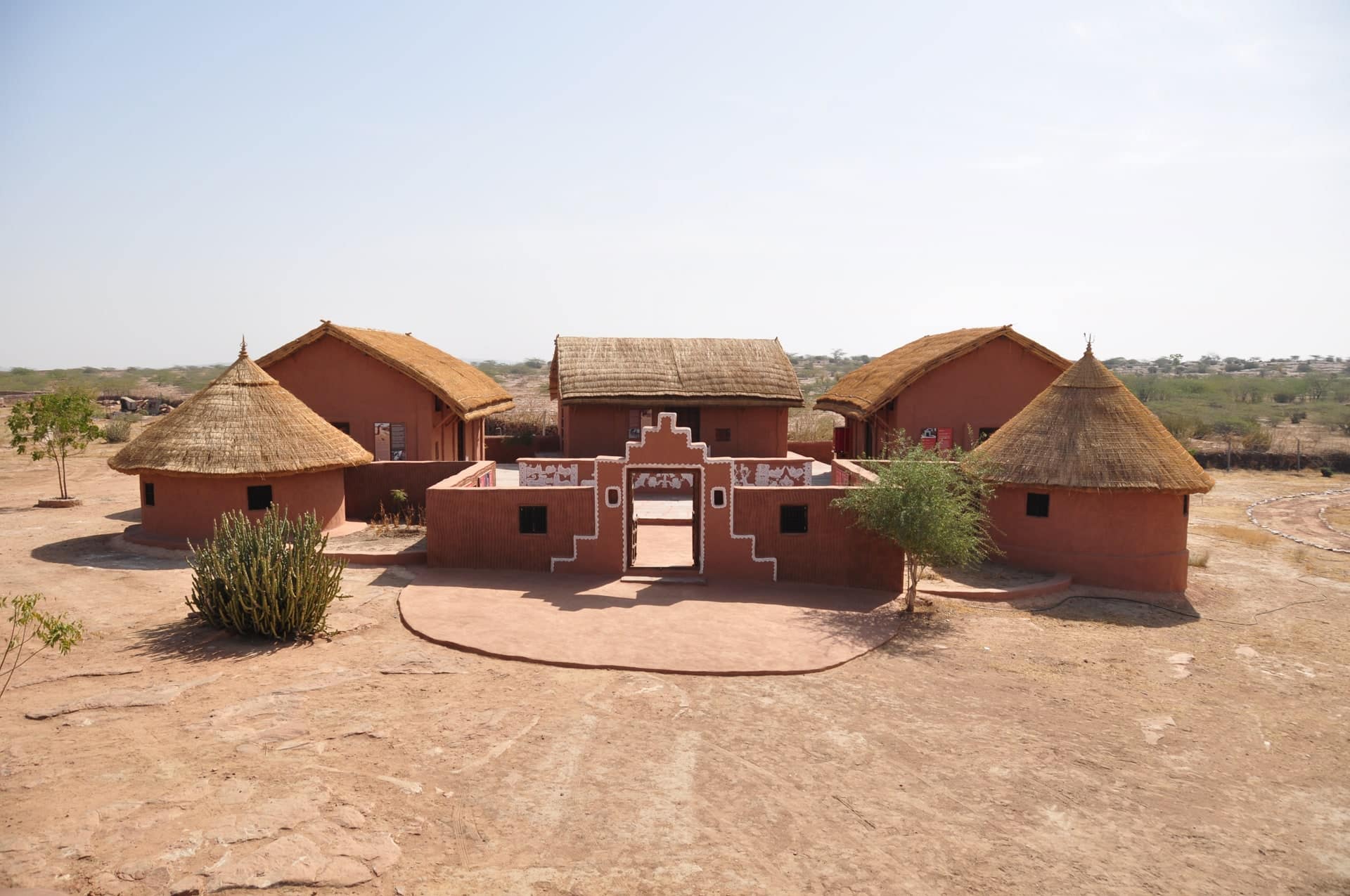
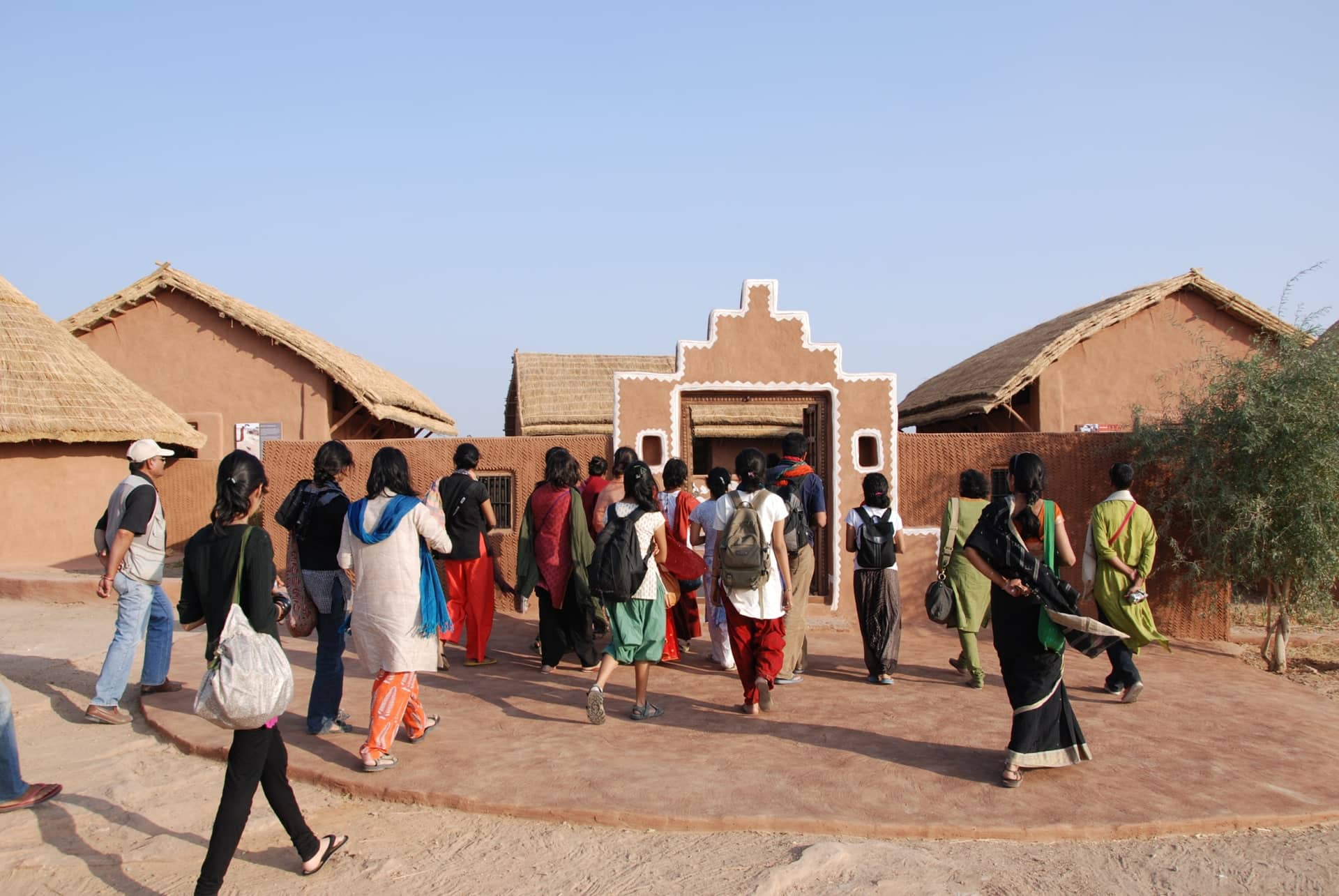
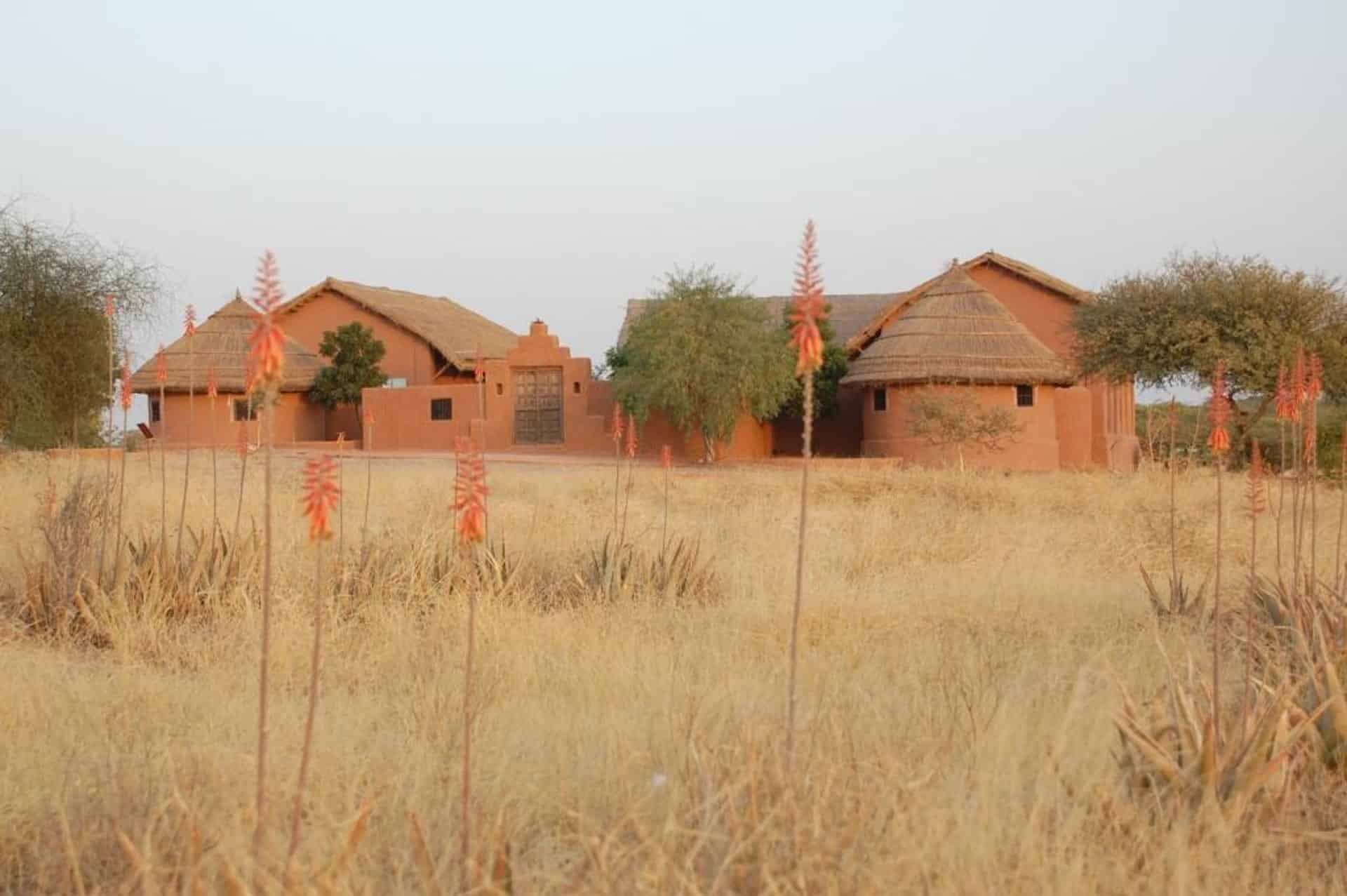
In its tranquil surroundings today, it is hard to imagine that the site of Arna-Jharna: The Desert Museum of Rajasthan was once an abandoned sandstone mine surrounded by harsh, arid land. Through careful water-harvesting and ecological restoration, the crater of that mine has now become a serene lake – a nesting ground for birds, especially the peacock, Rajasthan’s state bird.
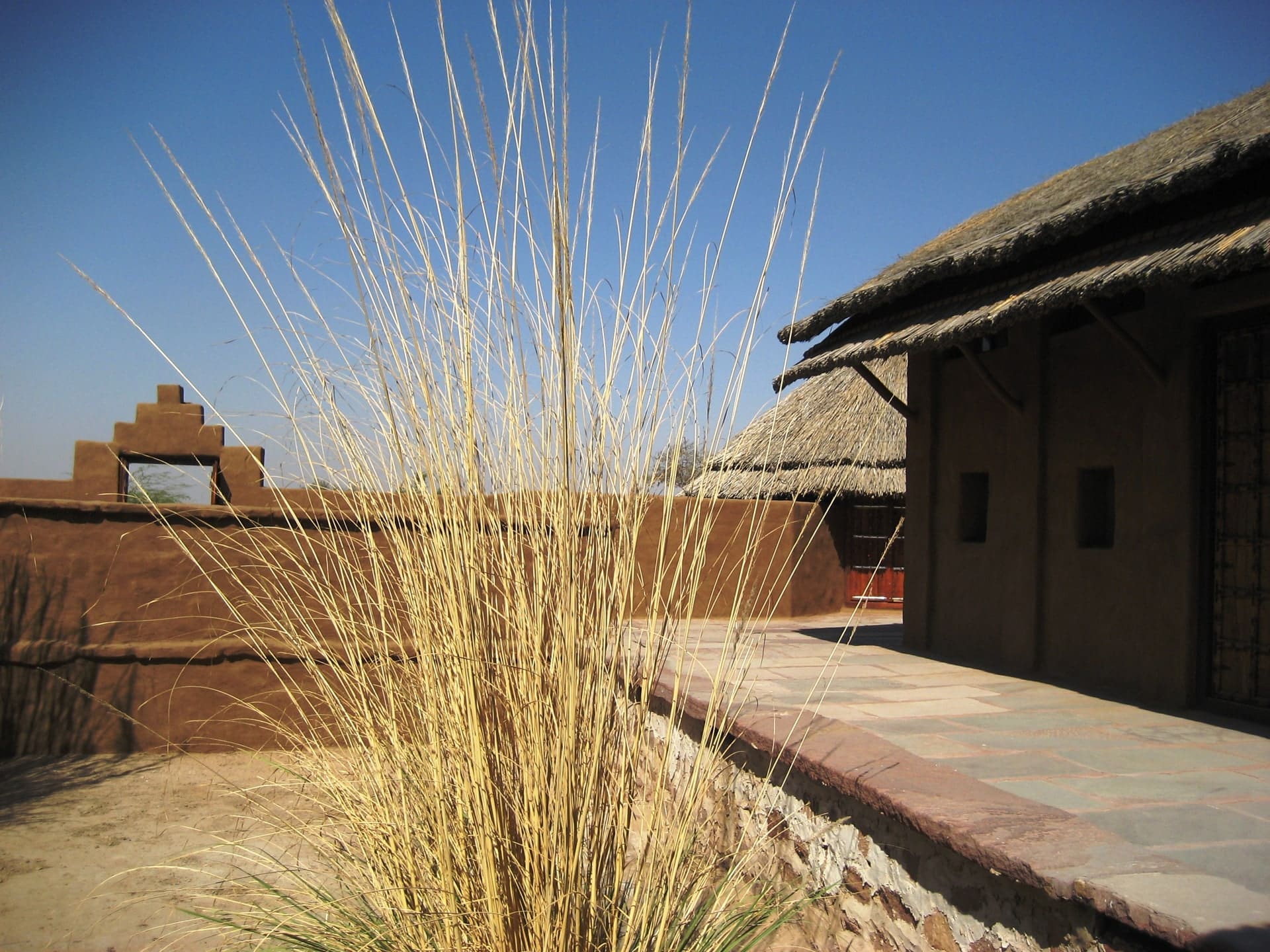
Though the landscape remains rugged, its soil has been patiently nurtured to sustain a rich biodiversity of indigenous desert flora – grasses, cacti, and resilient trees like khejri, ker, ber, rohira, and kumbat. Each element of this ecosystem forms part of the museum’s living classroom, where biodiversity, geology, and water conservation are woven into the visitor’s learning experience.
At Arna-Jharna, the boundaries between inside and outside dissolve. The museum stands as a tribute to the ecological foundations of people’s knowledge – knowledge that continues to guide and inspire ways of rebuilding the present.
The Story Behind “Arna-Jharna”
The words Arna and Jharna literally mean forest and spring. The museum is situated near the sacred Arneshwar Mahadeva Temple, a site associated with the legendary healing powers of spring water. The surrounding land carries its own history – including Raimal Talaab, a traditional rainwater reservoir, now known as Raimal Nada.
Built centuries ago from large, uneven sandstone blocks using a lock-and-key method with no binding material, this bund exemplifies the ingenuity of traditional water-harvesting systems. Local legend tells of a feud between a Rajpurohit brother and sister, Rai and Mal, over its ownership – a tale that ended in tragedy and left behind a curse believed to linger for generations.
Their story endures through stone carvings near the museum’s boundary wall – one depicting the trishul flanked by an elephant and horse, and another showing abstract lines that appear to map the site and flowing waters of Raimal Nada. These engravings, dated 1449 and 1503 AD, root the museum within a landscape where memory, belief, and ecology intertwine.
Philosophy and Practice
Arna-Jharna embodies two guiding principles that define its approach to culture and learning:
A Laboratory of the Ordinary – The museum is a living space of exploration, examining the everyday objects and practices that sustain life in the desert.
The Folk is Contemporary – Traditional communities are not relics of the past; they are part of a dynamic, evolving present, adapting their knowledge systems to modern contexts.
To ground these ideas in practice, the museum dedicated its first few years to a single, humble object – the broom. This focus was not about display but about understanding interconnections:
the natural resources used in broom-making,
the lives and labour of broom-makers from marginalized communities,
the myths and beliefs surrounding the broom,
and its role in local economies and environments.
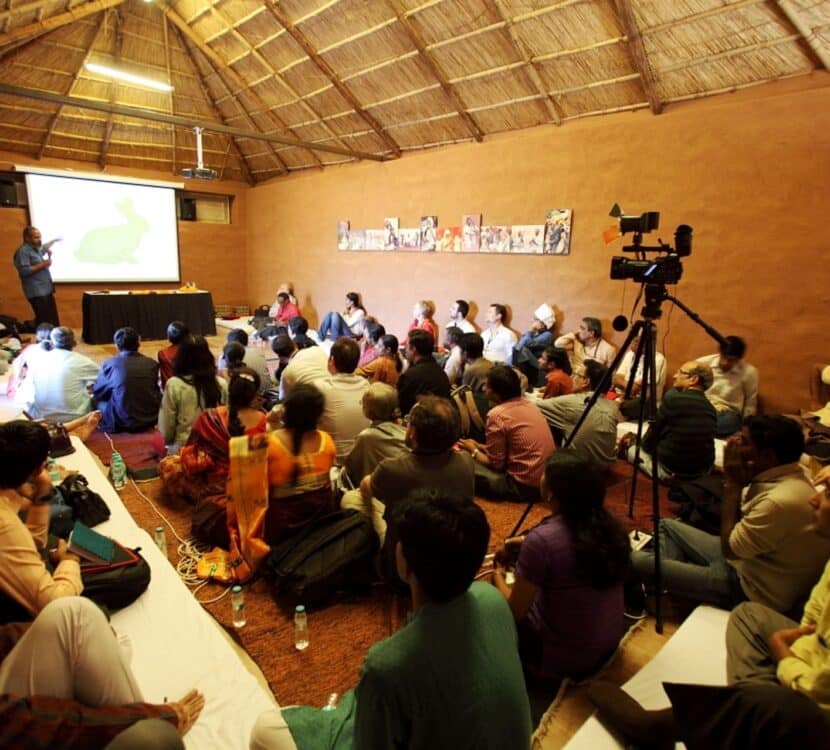
Through this lens, the broom became a starting point to explore interdisciplinary learning – combining material culture, community knowledge, and alternative curatorial models that respect the integrity of grassroots traditions.
A Living Museum of the Desert
Arna-Jharna continues to evolve as a living museum, where the desert itself becomes the exhibit – its ecology, crafts, and people shaping a continuous dialogue between tradition and modernity. Guided by Komal Kothari’s vision, it reminds us that culture is not a thing of the past, but a way of understanding and sustaining life in the present.