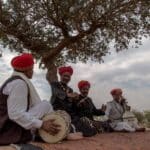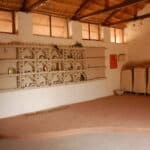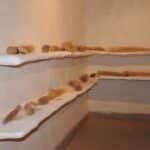


At Arna-Jharna: The Desert Museum of Rajasthan, these age-old practices are not just historical artefacts — they are living lessons in sustainability, reminding us how traditional knowledge can guide modern challenges.
A Land Shaped by Thirst
The Thar may appear barren, but beneath its stillness lies a deep intelligence of survival. Over centuries, desert communities developed intricate water-harvesting systems that responded to local geography, rainfall patterns, and social needs. Each system — from taankas (underground tanks) to johads (small check dams) — represents both engineering skill and ecological sensitivity.
Rather than conquering nature, these systems worked with it — slowing down the flow of rainwater, letting it percolate into the soil, and replenishing wells and aquifers.
The Story of Raimal Nada
The land where Arna-Jharna now stands carries one such story. Once an abandoned sandstone mine, it was transformed through careful restoration into a thriving ecosystem. At its heart lies Raimal Nada, a centuries-old rainwater bund built from uneven sandstone blocks, fitted together without cement or mortar.
This ingenious lock-and-key construction ensured durability and flexibility, allowing the bund to withstand years of monsoon flow. Local memory preserves tales of its makers and the community that depended on its waters — stories that still echo through the museum’s landscape today.
Everyday Wisdom, Enduring Design
Across Rajasthan, traditional water structures like kunds, nadis, and baoris (stepwells) served as both practical and social spaces — where people gathered, celebrated festivals, and exchanged stories. Their design reveals an understanding of climate and topography that modern infrastructure often overlooks.
These systems remind us that sustainability was not a new idea; it was an everyday practice rooted in observation, restraint, and respect for nature’s rhythm.
Learning from the Past for the Future
At Arna-Jharna, visitors explore how ecology and culture intertwine — how a single drop of water connects geology, architecture, ritual, and community life. Through guided tours and exhibits, students and researchers see first-hand how local materials, traditional craftsmanship, and collective labour created one of the most efficient water networks in the world.
In a time of growing water scarcity, these lessons from the desert feel more relevant than ever.
A Living Classroom
The museum’s restored lake now attracts peacocks and migratory birds, while the surrounding vegetation — khejri, ber, ker, and rohira trees — sustains new forms of biodiversity. What was once a barren mine has become a living classroom on how human care can heal land and water alike.
Visitors leave with a renewed sense of what it means to coexist — to draw from the past not as nostalgia, but as guidance for the future.
Plan a Learning Visit →